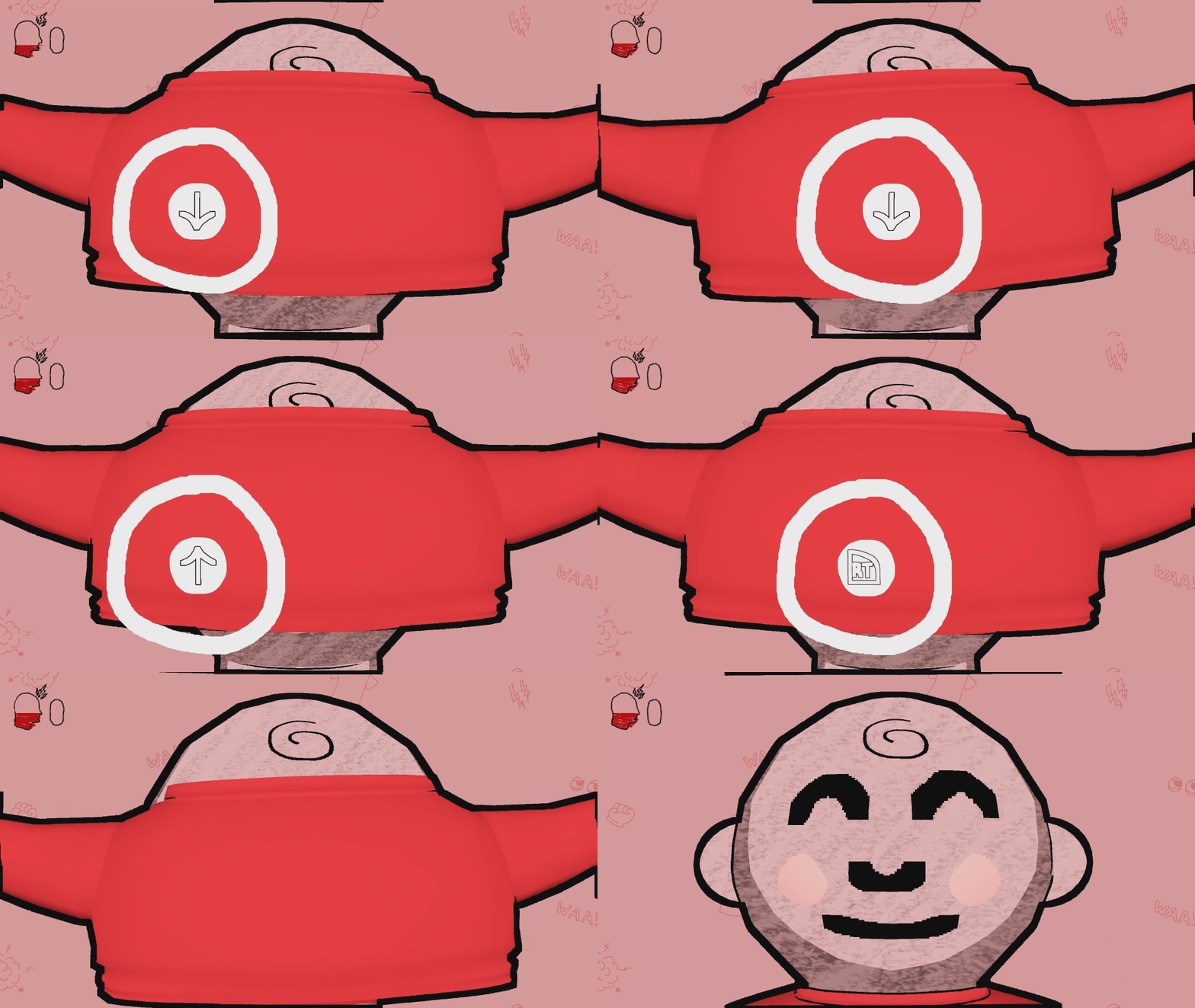
So it’s been almost a year since I released my minigame dad-simulator narrative love letter to becoming a dad during the pandemic, and I’ve had a lot of time to think about the release of the game, some lessons I’ve learned running a studio, and reflect on what’s ahead for Essay Games.
I think first and foremost, I want to thank everyone who’s played BoJ! It’s been amazing to see all of the positive responses, feedback, press, and celebrations that have come from friends and strangers over the past year. I’m truly thankful, and every time I read or hear someone’s reaction to the project, I get a lil’ misty.
Then, I’d like to say that even though Essay Games is a “solo” project, Bundle of Joy was not an individual effort. Not only did Naj Salam, Fabian Bubla, and Ethan Desautels contribute drawings, code, and music (respectively), but the game was shaped by many playtesting events at NYU, Playcrafting, and Wonderville. In addition, I held very targeted playtesting events with some super special friends that heavily contributed to ideation and bug fixes at crucial stages of development. I’m so indebted to everyone who helped with BoJ, and without your support, idk if I’d be able to continue making games.
As part of the run-up to the anniversary, I’m trying to get more folks to leave reviews and hope to get 25 reviews by March 25th. If you’ve played the game and liked it, please leave a Steam review. I feel like I’m saying this in contrast to some statements below about not being so biz-dev-y… but still, I’d love your help continuing to share BoJ with others. (tytyty)
So I thought about sharing a couple of big things I learned along the way and reflect on what I’d try differently in the future for Essay Games’ next commercial project (more on that in a bit). I guess you could read this as “advice,” but I generally balk whenever someone tries to tell me what I should do for my projects, so instead take these as anecdotes meant to be helpful.
So here are the big highlights:
- Release a really solid demo
- Be wary of traditional PR strategies
- Finish your game, then focus on PR (if possible)
Notes on the demo
The first bullet point isn’t really that much of an original thought, but it’s something I think I took for granted with BoJ. I think the demo I released was solid, and it definitely showcased the central gameplay loop, BUT it didn’t leave a lot to the imagination for players and didn’t encourage folks to continue playing in any meaningful way. Once people played the demo, they kinda got the gist of it (and again, for the most part, really liked what they played). But there was no intrigue with the demo and no “call to action” for the player to continue with the full game.
A recent game that has an incredible demo is Titanium Court by AP Thompson. The demo gives you a lot of the central mechanics and game loop, but ends at a pivotal moment of the core narrative. It brings the player right up to a suspenseful moment that you’ve been preparing for over the ~2.5-hours, just to have the demo end. TC playfully encourages you to come back when the game is fully released, telling the player that saved progress will carry over to the full game. Many games are doing this, especially games with any kind of rougelite elements, but TC does this exceptionally well because it pits story discovery against mechanical mastery.

Some of the issues with the BoJ demo are a fault of my design, some of this is just the nature of the game I made, but some of this is also a lack of “demo release strategy.” I knew that showing off my game during Next Fest was kind of mandatory for commercial appeal, and it helped structure my production timeline in the final months. But my strategy for the demo itself wasn’t fully developed, and I “gave away too much” with what I showed. I don’t mean that I literally showed too much gameplay. Rather, I didn’t withhold specific content and/or incentivize the player enough. I didn’t let the narrative “hang over” players; I didn’t let the “dread” that BoJ instills linger with the player. Doing so might’ve encouraged players to seek more resolution from their gameplay and could’ve led to more full purchases.
Seeing this mistake in hindsight, and doing a bit more market research for my upcoming project, has actually led me to consider removing the BoJ demo from my Steam page. Upon further reflection, I’ve made up my mind and will be taking the demo down shortly to encourage folks to purchase a full copy. This will be an experiment, and I’ll see how it goes and be sure to report back.
My recommendation to indies and solo devs is to play through Steam Next Fest demos either the quarter or two before your release window to check out how folks are encouraging players to return to the game after the demo ends. What tactics are designers using to get players “into the material”? How do you feel once you’ve ended a demo? How can you showcase the best parts of your game while keeping elements gated? Take notes and iterate!
On PR / Marketing
One of the biggest things I learned in the process of making BoJ was bizdev. I hadn’t released a deliberately commercial game prior. Even though The Last Survey has been downloaded over 15K times between Steam, itch.io, and Nintendo, I hadn’t really done any bizdev research. I had worked on a couple of small pitch decks and had submitted grant applications for art funding, but those are much different processes from doing proper market research and business analysis in games.
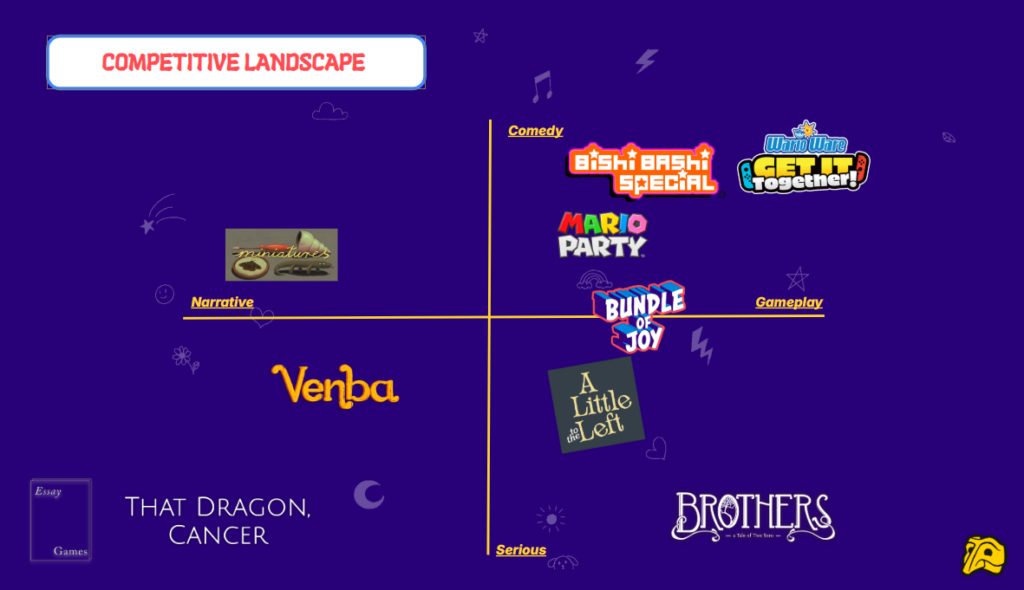
Some of this learning was spurred by working with a marketing specialist Jamin Smith, founder of “bold and bizarre” indie games publicity company Pantaloon. Jamin was incredibly helpful in mapping out a PR strategy for BoJ and showing me a lot of common PR tools and techniques for commercial games. He was also instrumental in keeping me on task, making sure I was being mindful of creating eye-catching assets, and documenting my process so that I could share development on social media platforms to drum up interest leading up to release.
In truth, Jamin did as much producer work on BoJ as he did marketing. We worked on timelines, deadlines, community building, and crafting a lot of the identity of BoJ and Essay Games. It was a really helpful relationship, and I’m really excited to see Pantaloon grow and continue to support a lot of great projects (including working with Titanium Court‘s publisher Fellow Travller).
This all being said, I’m not sure I would work directly with a marketing partner on future projects. It made focusing on the day-to-day developmental benchmarks hard because I also had to be mindful of how creative decisions might affect potential marketing partnerships and opportunities. And I hated that feeling.
This is no one’s fault but my own. My stubbornness and insistence on my authorial and creative voice don’t necessarily mesh well with traditional games marketing. Again, I think the producer relationship was absolutely fundamental to BoJ crossing the finish line, but I think worrying about how many Steam keys I was releasing on a scatter-shot mailer while trying to figure out if a certain minigame would be included in the final build made my head hurt.
I know there’s a TON of free resources out there (Pantaloon offers some!) for marketing indie games. There’s a mountain of YouTube videos, masterclass seminars, multi-part blog series, and LinkedIn success stories about successful marketing strategies and figuring out how to crack the black box of Steam wishlists. But to be very frank, I tried a lot of these methodologies, and none of them really worked. As I’ve posted elsewhere, BoJ never cracked 2000 wishlists, even after getting good international press, doing some small paid ads, posting to big and small platforms, and building the brand for about 6 months.
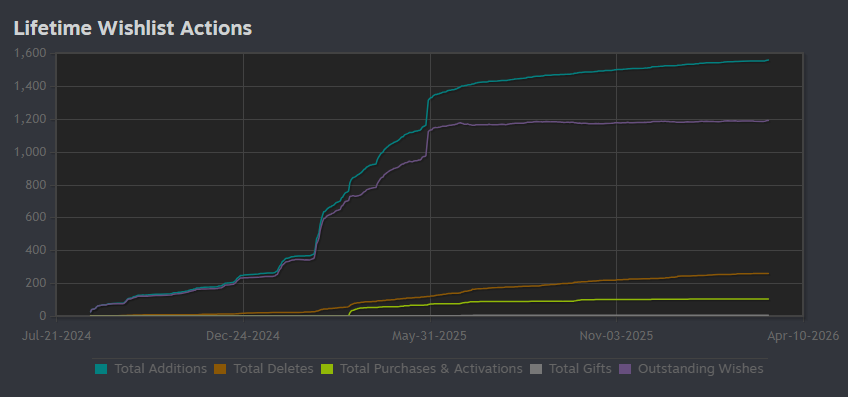
Now, I fully understand that BoJ is pretty niche. A lot of the strategies out there are probably really good for pixel-art, deckbuilder, VHS horror, and friendslop games finding and building their audience before release. And I don’t mean to be dismissive of anyone trying to help indies and solo devs trying to find audiences, funding, and sustainable marketing or publicity practices for their games.
But I want to warn folks that all marketing should be purpose-fit. Thinking about your target audience is always helpful, but be realistic about your audience (in terms of numbers) and be really measured with how you think you’re going to reach them. The thing that worked best was always personal emails to friends and cold-calling press with personable, quirky, and unabashedly “me” messages. Trying to wedge my lil’ niche introspective game about being a dad into a neat marketing strategy of an RTS game was never going to work. And maybe I should’ve known better from the jump.
Also, it’s OK not to market your game in any way besides word of mouth and sending personal emails. I think if marketing isn’t your thing or if you’re making something that’s not “in it for the money” then don’t bend to the whims of a highly financialized market. Mikhail Klimentov wrote about fighting the urge to frame your game in purely financial terms, and iirc it spurred a lot of debate when it was initially published. But maybe revisiting this with some critical distance might be helpful…?
Finish your game
Building on the above notes on PR, one of the biggest things that I wish I had done was wait to start my marketing strategy until I had finalized a lot of my development questions. This actually also builds off of the demo stuff as well, because I felt like I was in such a rush to get BoJ off my plate since I had already been developing it for about a year and a half. I was too eager to get it to a release date, and didn’t let the game marinate and develop enough after the core loop and story had been cemented.
As a result of this rush, I didn’t really know what it was that I wanted to market with the game. I thought it was one thing, but by the time I was getting ready for launch, I felt like I had just started to come around to what it was that I really wanted to say with the work, or rather, how I wanted to say it. That confusion of messaging didn’t help my PR strategy, and it made me delay getting in touch with journalists and streamers. I should’ve known better because I’ve been on that side of the fence and know that it takes time putting together pitches, edits, and fitting pieces within larger posting cycles. Also, if I had more time after finishing my production cycle and sent the game to more streamers earlier on, I could’ve worked on polish, bug fixing, and ironing out a lot of minor issues without running up against production burnout (which absolutely happened to me at the beginning of March 2025).
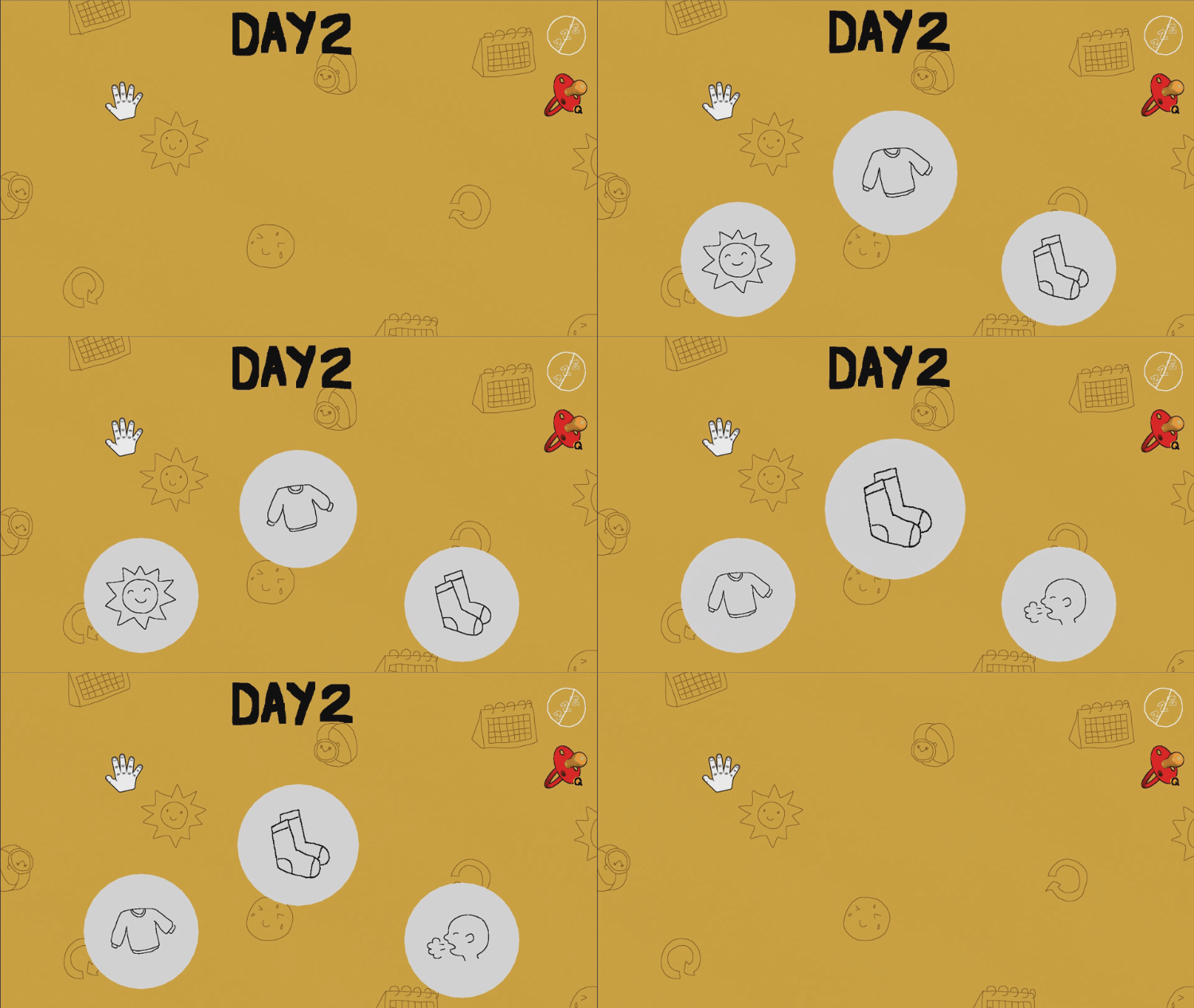
Part of that rush was due to money, employment, and the limited financial runway I had given myself to get Essay Games off the ground and release our first commercial product. In truth, the financial pressure was mounting as I was getting further and further into the development timeline for the project. I often think about whether I had taken a bit more pressure off the timeline and split time working on BoJ with other freelance and contract work, that maybe the end product would’ve been more rewarding and successful. But maybe that’s hindsight talking, since I’m not sure what more time would’ve actually permitted me besides over-thinking release windows, festivals, and non-development questions (which now that I’ve written and re-read, could’ve done me some good…?).
But if you’re in a position to wrap up most of your production before you really start thinking about marketing, showcasing, and building up a launch audience, then definitely take that time. In this vein, if you can also do a lot of the heavy lifting before reaching out to publishers and formulating a release strategy, you might be better off. I totally understand wanting to get things out the door and into the world. There’s a lot of anxiety and nerves surrounding the release of a game, especially if it’s something you’ve been working on for many years. But if you’re developing a game alongside other sustainable work, then give yourself the opportunity to fully commit to building and executing your marketing plan.
—
There are so many more granular details about what I’ve learned in the release and first year of Bundle of Joy that I’d love to share if any devs out there are thinking about their first commercial release. I’m far from an expert, but as a life-long educator, I love sharing what knowledge I’ve gained with others. Feel free to email me, and happy to listen and share as much as you’d like or need.
NOW, looking ahead!
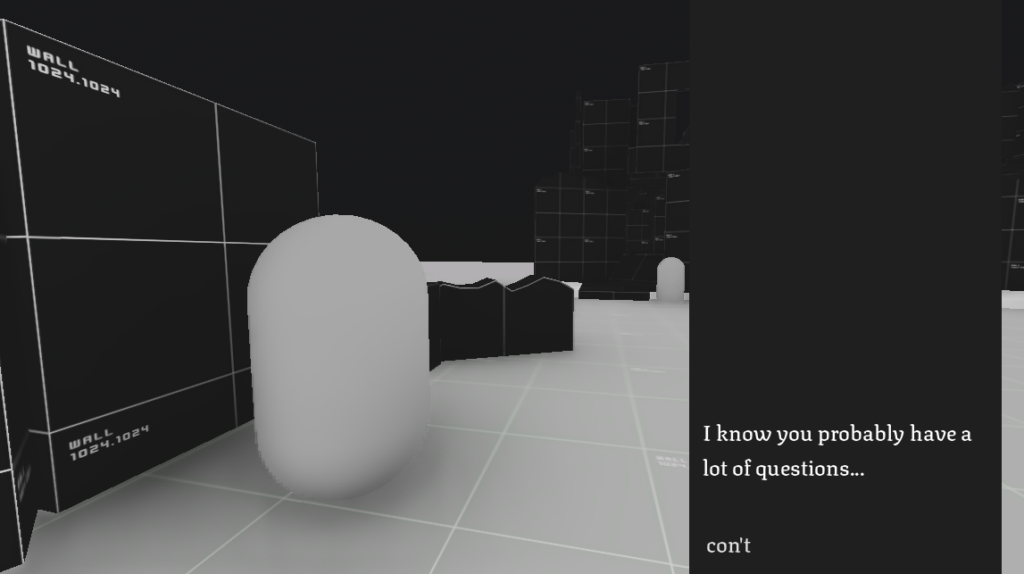
Going forward, the Essay Games blog will continue to post thoughts on games & contemporary media, but I’ll also be using this space for ongoing devlog posts on upcoming projects. In that vein, I’ve been working on a prototype that’s a bit of an Essay Games “return to form.” It’s a narrative project about a historical moment that mirrors (in some ways) how class struggles are amplified by technology and lack of political/policy oversight. I won’t get into too many details here, but I will start to share more musings on its development (in Godot, of course!) over the next couple of months.
Right now, as maybe a sneak peek, I wanted to mention that the game is also much more systems-heavy than previous projects. I’ve been really inspired by games (and demos!) that I’ve played where narrative choices actively contribute to player resources. Games like Station to Station and Keep Driving definitely fall into this category, but so does Citizen Sleeper 2 to a certain extent (though I have issues with how this is implemented from a game design perspective). The upcoming Thousand Hells, Esoteric Ebb, and Amberspire are also in a similar vein to what I’m prototyping (from what I can tell). For this upcoming project, I wanted to make a story that relied more on resources, which in turn required me to make something more system-y.
I’ll be updating details and sharing more behind-the-scenes development progress in the coming weeks, leading into the summer, so stay tuned!
Leave a Reply